What it is
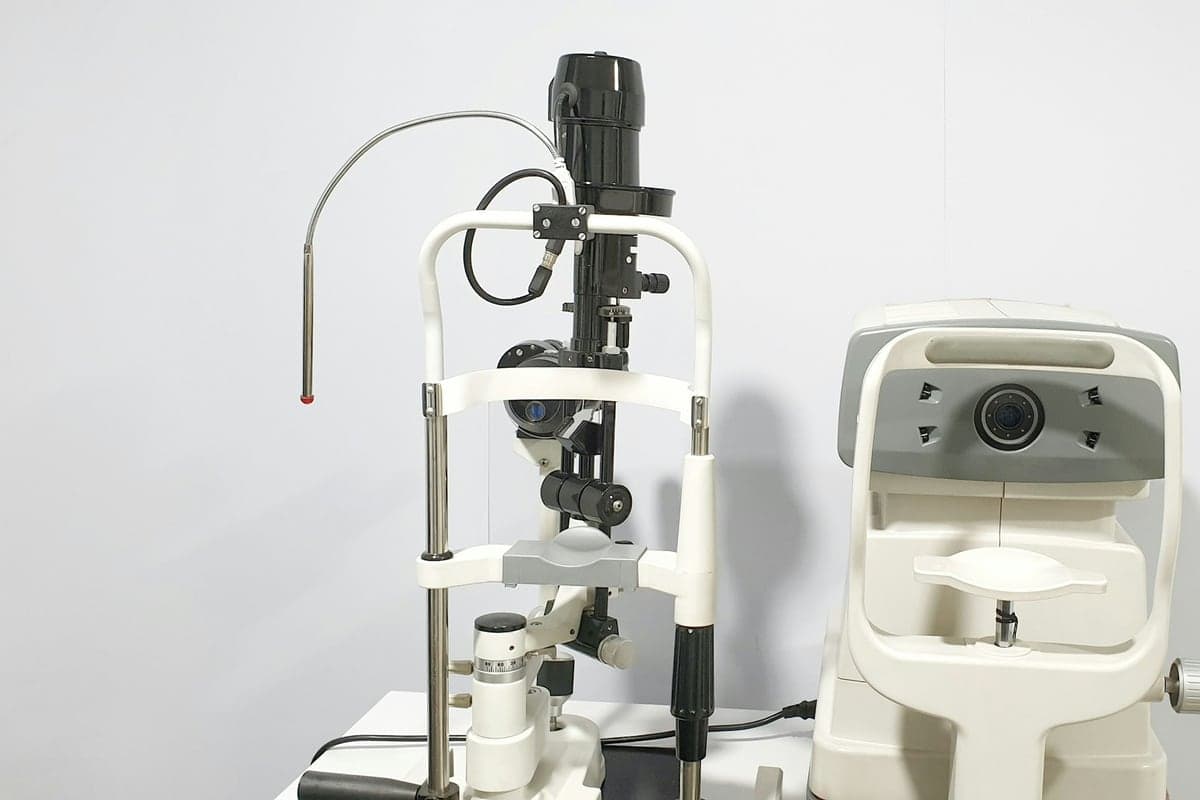
Laser indirect ophthalmoscopy (LIO) delivers retinal laser treatment through an indirect ophthalmoscope — an instrument worn on the doctor's head, used with a hand-held lens. It gives a wide view of the retina and reaches its outer (peripheral) parts, which can be hard to treat with a laser at the slit-lamp.
Who it's for
People with conditions such as retinal tears and selected retinal vascular disorders that need laser treatment to the peripheral retina, depending on the clinical findings. It is also used when a patient cannot sit at a slit-lamp laser — for example, babies with retinopathy of prematurity.
What to expect
Your pupil is dilated with drops and the eye is numbed. You lie back or recline while the doctor views the retina through the head-mounted instrument and applies the laser. You will see bright flashes of light and may feel slight pressure on the eye.
Recovery
Vision may be blurred and glary for a few hours, so come with someone who can take you home. Mild aching for a day is common. Follow-up visits check that the treatment has worked.
Frequently asked questions
How is LIO different from other retinal laser?
The laser works in the same way; LIO delivers it through a head-mounted instrument, which gives a wider view and reaches the far edges of the retina.
Will I need more than one session?
Sometimes. It depends on the condition and how much of the retina needs treatment. Your doctor will advise after the first session.
Medically reviewed by Dr. Sweta Patro